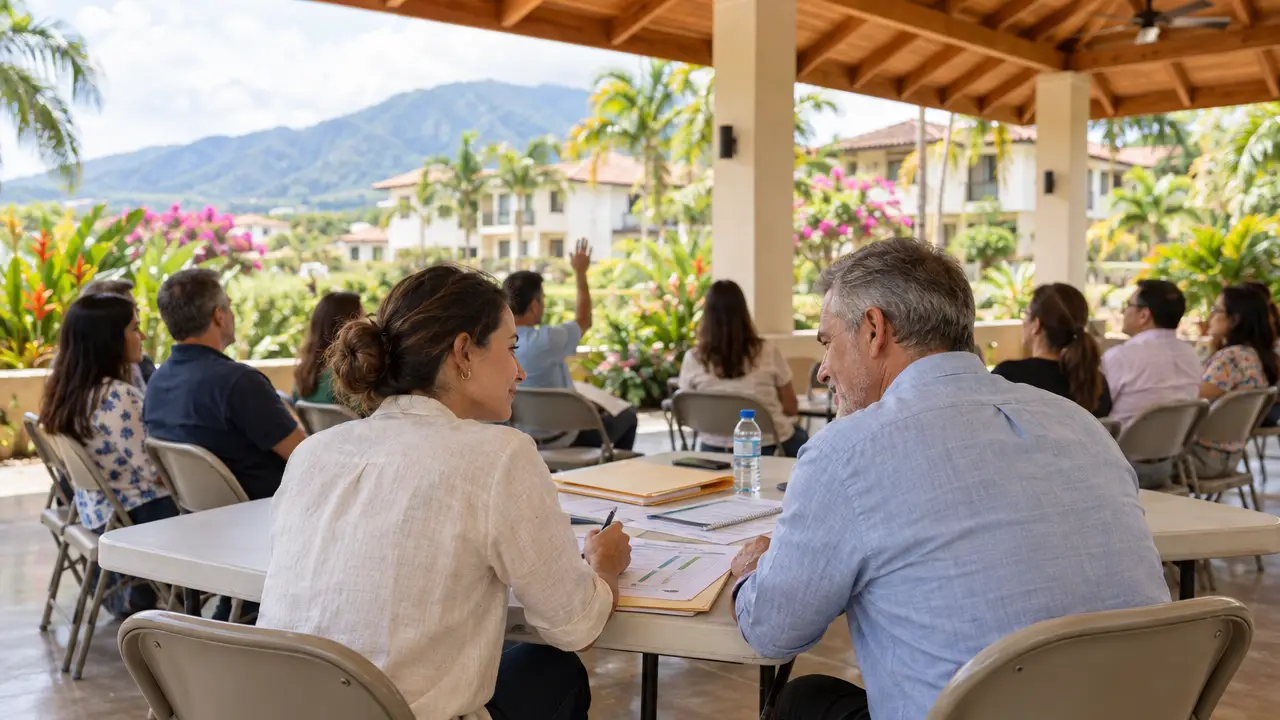
Disagreements during assemblies, expenses that seem excessive, issues related to communal living, and difficulties with property management are among the most common concerns for condominium owners in Costa Rica. While living in a condominium offers many advantages, it also entails sharing decisions, responsibilities, and spaces with others. For this model of communal living to function effectively, there must be a relationship built on trust and collaboration among the owners, the management, and the condominium’s representative bodies.
However, there is not always consensus regarding the decisions that are made. At times, concerns arise regarding specific expenses, the contracting of services, maintenance priorities, or how the needs of residents are addressed.
At the Association of Condominium Owners of Costa Rica, we receive inquiries from owners who wish to better understand their rights and learn what options are available to them when they believe a situation requires attention. Although each case requires an individual assessment, there are some general considerations that can help in finding a solution.
One situation that may cause concern among property owners is the emergence of expenses that appear high, unnecessary, or not well-aligned with the needs of the condominium. For instance, questions may arise when the same facility requires frequent repairs, when the cost of a service increases significantly, when work is commissioned for which the necessity is not clear, or when unexpected, extraordinary expenses appear. Such situations do not necessarily imply any irregularity; the maintenance of facilities, unforeseen events, and the specific characteristics of each condominium can justify significant expenditures.
Nevertheless, it is reasonable for owners to seek an understanding of the rationale behind certain decisions and the benefits these decisions offer the community. Rather than questioning an expense solely based on its dollar amount, it is better to examine factors such as its necessity, the reasonableness of the cost, and any alternatives that were considered.
If doubts arise, it is advisable to pose specific questions to the management and review the provisions set out in the condominium’s bylaws. Furthermore, it is important to remember that the Annual General Meeting serves as the formal venue for management to provide an account of its activities; here, owners can review and evaluate the management’s performance, as well as raise concerns regarding the use of common resources. It is recommended that inquiries be submitted well in advance, allowing management the time to prepare and provide comprehensive, well-substantiated responses.
The goal should not be to challenge every single expense, but rather to foster responsible decision-making that ensures the proper use of common resources.
Condominium management must address a wide range of needs, from the maintenance of common areas to the procurement of services and the handling of day-to-day matters. It is natural for owners to have different priorities; some may view a particular repair as urgent, while others might prefer to allocate resources toward different improvements or avoid additional expenses.
The existence of disagreements does not, in itself, imply that the management is acting improperly. However, when concerns arise repeatedly—or when specific decisions cause unease among several owners—it is advisable to foster an orderly dialogue based on facts and concrete proposals. It is also important to understand which decisions fall under the purview of the management and which require the involvement of the Condominium Owners’ Assembly, in accordance with applicable regulations and bylaws. Informed participation can help prevent conflicts and strengthen trust within the community.
Recurring noise, disputes between neighbors, and situations that disrupt the peace of residents are also among the issues brought to our attention. Many of these matters are addressed in internal regulations, which establish rules for communal living as well as procedures for handling potential violations.
When attempts to resolve matters through the building or property management prove ineffective, it may be appropriate—depending on the nature of the issue—to contact municipal authorities, the Ministry of Health, or law enforcement. In situations involving threats, physical aggression, or risks to personal safety, it is essential to reach out directly to the relevant authorities, rather than relying solely on an administrative response.
La relación entre propietarios y administradores requiere comunicación, responsabilidad y claridad en el ejercicio de sus funciones. Sin embargo, la existencia de desacuerdos o insatisfacción no significa necesariamente que se haya cometido una irregularidad. Por ello, antes de formular acusaciones o adoptar medidas, resulta conveniente reunir información, revisar la documentación disponible y determinar cuáles son las competencias de la administración y de la Asamblea de Condóminos. En determinados casos, la orientación de un profesional en derecho con experiencia en materia condominal puede ser especialmente útil.
Not all conflicts require immediate recourse to the courts. At times, a formal request for information, effective communication, or active participation in an assembly can help resolve disputes. In other cases, it may be necessary to resort to administrative or legal mechanisms. The key is to understand that protecting the rights of property owners begins with knowing the rules that govern their condominium—and the mechanisms available to enforce them.
An association to provide guidance and support
At the Costa Rica Condominium Owners’ Association, we believe in the importance of fostering a culture of transparency, accountability, respect, and harmonious coexistence. While our Association does not exercise oversight functions regarding property management, nor does it have the authority to resolve individual disputes, we aim to provide general guidance and, when necessary, offer referrals to professionals with expertise in condominium matters.
Do you have concerns regarding the management of or life in your condominium?
We invite you to connect with our Association and become part of a community dedicated to promoting best practices for condominium living in Costa Rica. Membership is completely free and can be easily arranged online via our website.
Costa Rica Condominium Owners Association
Promoting better community living and condominium management.
Note: This article is for informational purposes only and does not constitute legal advice for specific situations. The application of legal provisions will depend on the circumstances of each case and the applicable regulations.